

SamyFlex: try a new material without wasting kilos of powder
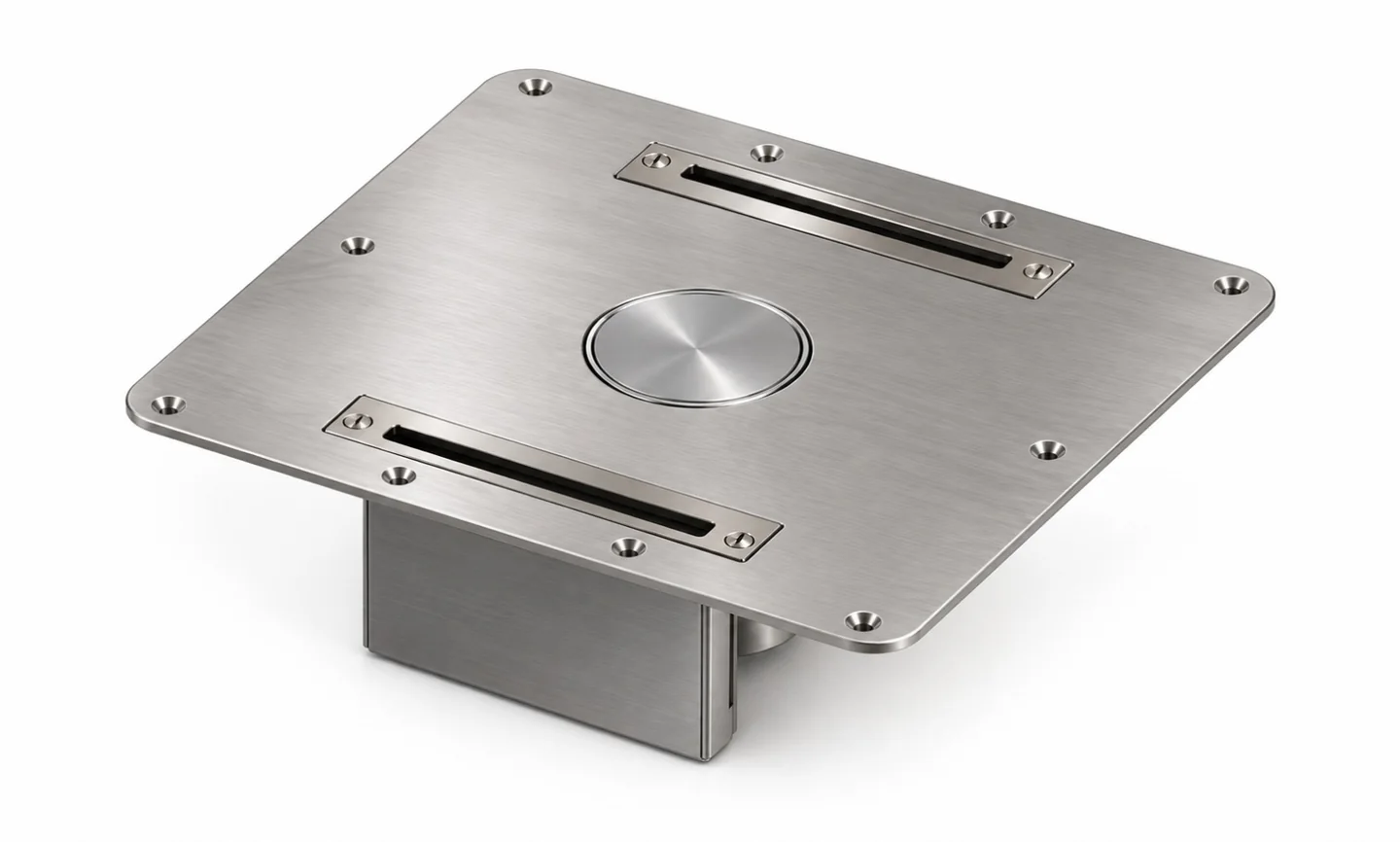
To test a new material on an LPBF machine, the amount of powder covering the part isn't enough: you have to fill the entire vat, even if you're only making three one-centimeter test specimens. With a titanium or copper alloy, this requirement turns a two-day test into a budget-conscious decision. The SamyFlex is a reduced-volume module for the ALBA 500 that lowers this minimum to a fraction.
What exactly is it
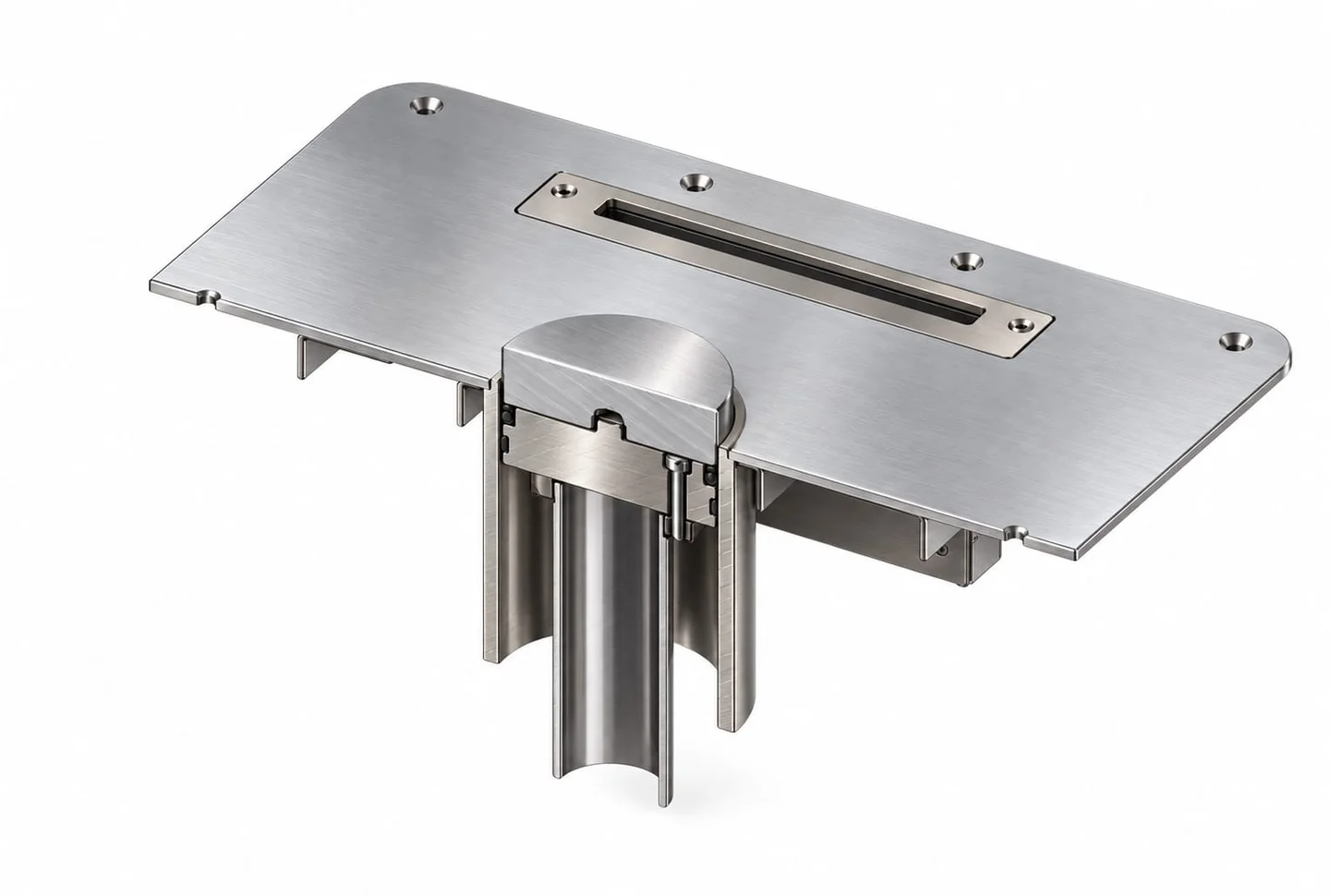
A module that is installed inside the manufacturing chamber of the ALBA 500, replacing the work area with a smaller one. It is custom-made, with a diameter specified by each customer within a range of 80 to 150 mm, and is installed and removed with screws, requiring no special tools. Changing the configuration takes only minutes, not a service intervention.
| Comparison | Complete ALBA 500 build chamber | With SamyFlex |
|---|---|---|
| Manufacturing area | 250 × 250 mm | Circular, from 80 to 150 mm in diameter |
| Applications | Production and large parts | Test specimens, trials, and parameterization |
| Powder required for start-up | The amount for the entire vat | A fraction |
| Configuration change | — | Minutes, without technical service |
Why it matters more than it seems
The cost of the powder isn't the problem in production, where the material is distributed among many parts and the excess is recovered. The problem arises earlier: in the phase where you don't yet know if the alloy will work for you.
This is where a familiar pitfall occurs. To qualify a material, you need to manufacture test specimens, measure density, cut, etch the sample, examine it under a microscope, adjust parameters, and repeat. Each iteration requires a full tank. With an expensive alloy, the cost of figuring out if it will work can exceed the cost of the part you wanted to manufacture, and the project is abandoned before it even begins.
Reducing the startup volume changes that arithmetic. It doesn't make testing faster: it makes it affordable, which is the deciding factor in whether it gets done or not.
Who does it fit?
Technology and research centers. This is their daily work: new materials, in small quantities, with many iterations. They are also the profile that most quickly detects if a machine's parameters are locked, because they encounter this problem on day one.
Powder manufacturers. Anyone who produces an alloy needs to demonstrate that it processes well, and this allows them to do so without compromising an entire batch.
Companies with an application in expensive alloys. Titanium, cobalt-chromium, copper. The conversation shifts from "we can't afford to try it" to "let's try it and see."
How it fits in with the rest
This module is pointless on a machine with fixed parameter sets. It's only useful if you can also tweak the parameters: power, scan speed, frequency, energy density, infill strategy, and layer thickness, and save the result as your own parameter set. SamyStudio allows this because the software is ours.
The combination of these two things—reduced volume and open parameterization—is what makes it possible to qualify material that wasn't on the list from day one. Each one separately falls short.
It's the same idea that runs through the rest of what we do: not tying the customer to the consumable, not tying them to the software and not forcing them to buy a machine to find out if the technology works for them, which is what AdditiveDelivery is all about.
In summary
SamyFlex doesn't manufacture parts that couldn't be manufactured before. What it does is remove an entry barrier that wasn't technical but economic: the minimum amount of powder needed to figure something out. And that barrier is, by far, what has killed the most materials development projects before the first build.
What can be tested with a small amount of powder and what cannot, in what materials can be printed on metal. And how the powder used for testing is manufactured, in how to manufacture metal powder.
Trade fairs27 May 2018
ADDIT3D 2018: from prototype to a sellable machine
Process5 August 2026
Post-processing: everything that happens after the machine finishes
Trade fairs15 October 2022