

Sift titanium powder without taking risks.
Ultrasonic screen for additively manufactured metal powder. ATEX certified, interior that can be inerted with argon or nitrogen, and a throughput of one kilogram per minute.
It is the part of an LPBF installation that no one talks about in the brochures and the one that concentrates the real risk: the powder is recovered and reused in each build, and with titanium or aluminium that routine operation handles a material that in the form of fine powder is explosive.
Selling the machine and not the powder management is solving half the problem.
In an LPBF build, the fused part occupies only a small fraction of the powder bed volume. Everything else is unmelted powder that is recovered: it is vacuumed, sieved to remove splashes and agglomerates, blended with virgin powder in a controlled proportion, and returned to the machine.
This cycle repeats itself in every build, and that's where the risk lies. A conventional sieve requires striking the mesh to allow the powder to pass through, operates in an open atmosphere, and generates static electricity. With stainless steel, it's inconvenient. With titanium or aluminium, it's a different story.
What changes with ultrasound?
Ultrasound vibrates the mesh itself at a high frequency, so the powder passes through without needing to be struck or forced. It sieves finer, faster, and without the ignition sources introduced by an aggressive mechanical system.
In addition, it's possible to inertize the interior: replace the chamber's atmosphere with argon or nitrogen until the oxygen level drops below 0.1%. Without sufficient oxygen, combustion is impossible, no matter how much reactive powder is inside.
The numbers.
| Characteristic | Value |
|---|---|
| Screening capacity | 1 kg/min |
| Dimensions | 632 × 1588 × 570 mm |
| Weight | 220 kg |
| Power supply | 230 V · 50–60 Hz · 0.25 kW |
| Compatible inert gases | Argon, nitrogen |
| Gas flow rate | 10 l/min |
| Oxygen in chamber | Less than 0.1 % |
| Certification | ATEX |
| Mesh opening | Customized, according to the material and particle size of the work |
| Clamping dimensions | Adjustable according to customer specifications |
Two figures deserve attention. The first, the 0.25 kW: it consumes less than a household appliance and runs on standard household current, so it doesn't affect the electrical installation. The second, the 10 l/min of gas: inerting the interior doesn't increase argon consumption, which is what usually deters those considering working with titanium.
Compatible with any powder
The mesh size and clamping dimensions are custom-made to suit your specific needs. It's not tied to our powder or machines; it's a metal powder handling device and can be used with any brand.
That's what really gets the job done.
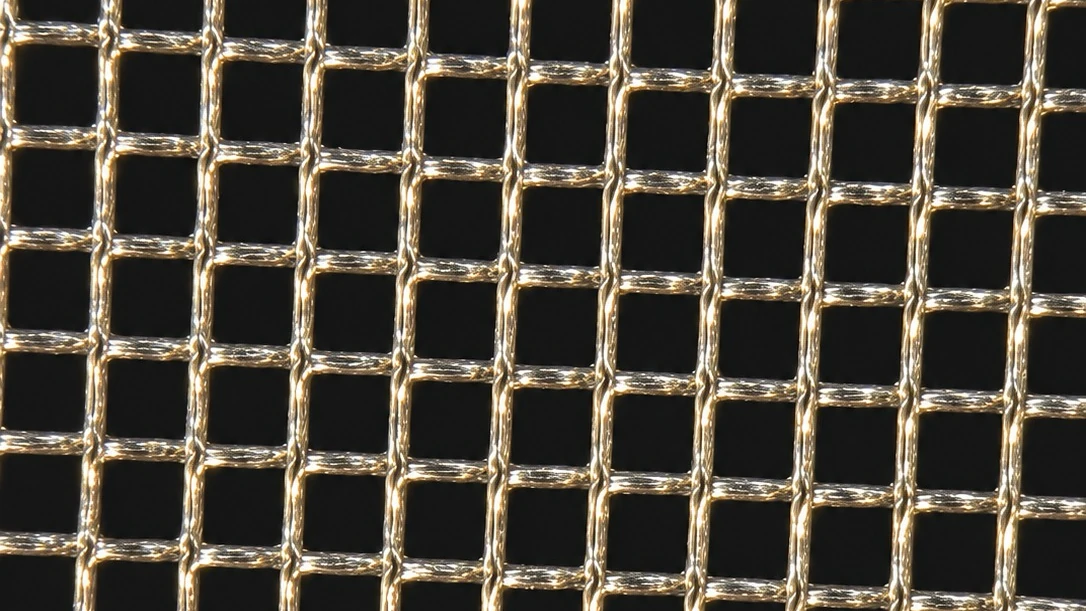
The machine vibrates, uses ultrasound, and inerts. But what separates the good powder from the useless is a tissue a few microns thick, and its condition is the variable that determines whether the screening is worthwhile.
Where do you put it?
The three dimensioned views of the Garbi, from the technical catalog.

- Width
- 632 mm It fits through a standard 800 mm door.
- Depth
- 570 mm Less than 0.4 m² of floor occupied.
- High
- 1588 mm It is loaded and unloaded standing up, without a ladder or pit.
- Weight
- 220 kg On wheels with brakes: it is rolled to the machine that needs to be sifted.
- Gaps ahead
- 800 mm Maneuvering space to open the two front doors. This is separate from the 570 mm depth.
The plan and table match perfectly. The maneuvering space must be added to the equipment dimensions: to open the two front doors, 800 mm of clearance is required.
What exactly does that certification mean?
Fine metal powder is an explosive
A solid block of metal won't burn. The same metal, divided into particles tens of microns in size, has an enormous exposed surface area, and when suspended in air, it can form an explosive atmosphere. Titanium, aluminium, and magnesium are serious examples.
ATEX is the European regulation for those environments
It regulates equipment intended for potentially explosive atmospheres. It is not a generic quality mark: it defines how the equipment must be constructed to prevent it from becoming a source of ignition.
It's designed from the ground up, or it won't work.
Grounding, absence of sparks, static control, and inerting capability. These are design decisions, not accessories added later to existing equipment.
And it affects the entire facility
Screening, transfer, storage, and vacuuming. Having an ATEX-certified screen and using a shop floor vacuum cleaner solves nothing: the chain is only as strong as its weakest link.
What you asked us about Garbi.
Does it work for powders other than Samylabs?
Is it always necessary to inertize?
How many times can the powder be reused?
Is it noisy?
The powder, back into the machine
Why screening is not a whim.
- Sustainability Excess powder: how much is reused, when it should be removed, and what is done with it In a laser powder bed fusion build, the laser melts only a small fraction of all the powder inside the…
- Process What does ATEX mean in a metal 3D printing facility? metal powder measuring fifteen to forty-five microns has an enormous exposed surface area relative to its mass. This, which makes…
- Materials How is metal powder manufactured and what types exist? Metal powder for additive manufacturing is produced by atomizing liquid metal: the alloy is melted and the jet is broken…
- Product ALBA 500 and Garbi: 500 W laser and a screen designed for reactive powder The ALBA 500 increases the laser power to 500 W—200 W more than the ALBA 300—with a build area of…